Pour yourself a coffee from a machine, grab a beer from a tap, or fill a bottle at a water dispenser, and there's a good chance a flow meter just did its job somewhere behind the scenes. These small sensors track exactly how much liquid moves through a system, and in food and beverage production, that job matters more than most people realize. Get the measurement wrong, and you end up with inconsistent drinks, wasted product, or worse, a hygiene problem nobody wants to explain to a health inspector.
This article walks through how flow meters actually work, where you'll find them across the food and beverage world, and what other measurement technologies compete for the same job. By the end, you'll understand why ultrasonic flow meters, and specifically the time-of-flight principle used in Allengra's sensors, have become the go-to choice for hygienic, food-grade applications.
How Do Flow Meters Work?
Not all flow meters work the same way, but the ones best suited to food and beverage use a method called time-of-flight ultrasonic measurement.
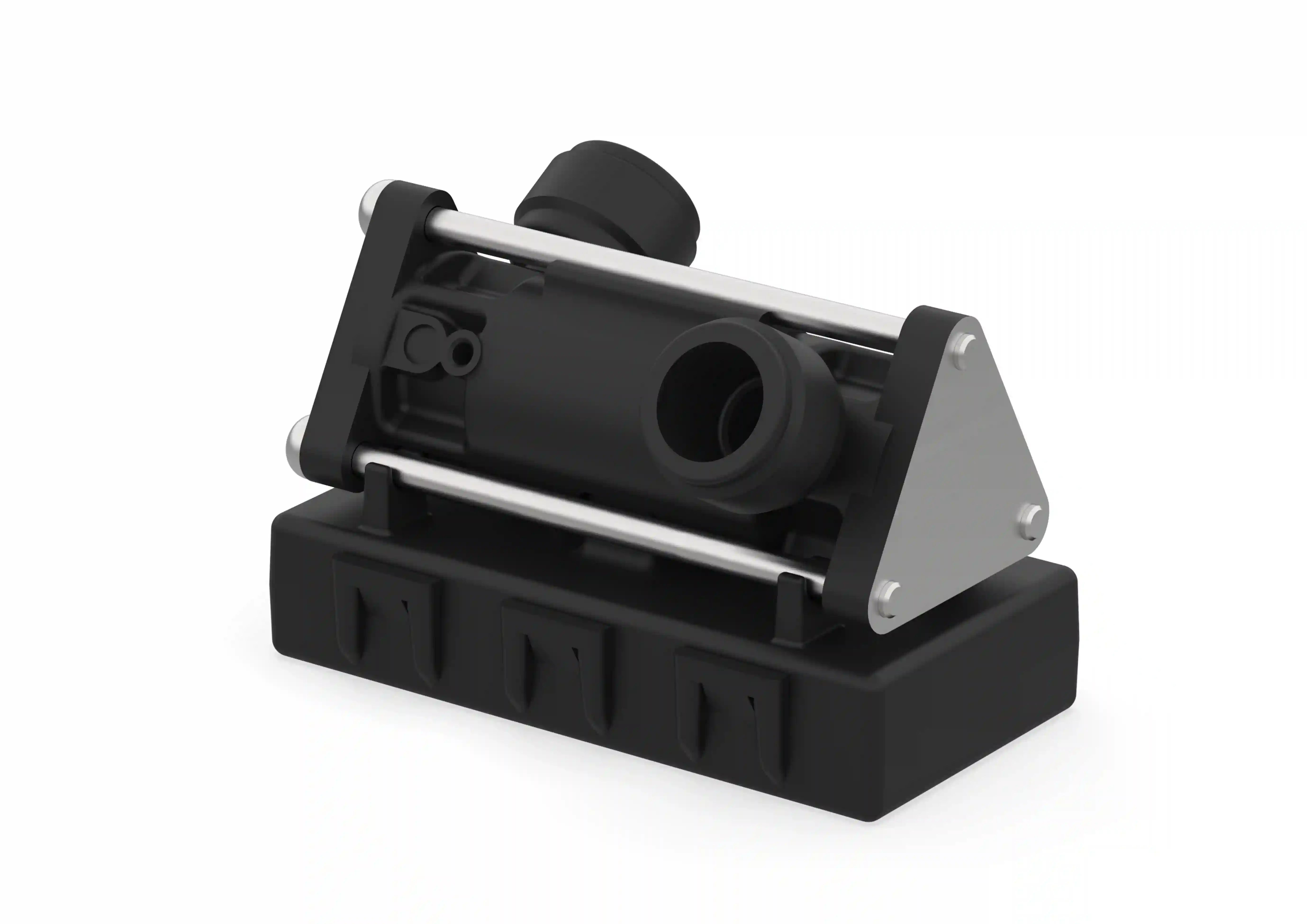
Picture two small ultrasonic transducers mounted on opposite ends of a flow path, one upstream and one downstream. Each transducer can send and receive sound waves. Here's the sequence:
The upstream transducer fires a sound wave that travels with the direction of the fluid flow, toward the downstream sensor.
The downstream transducer fires a sound wave back against the flow, toward the upstream sensor.
Both waves are timed. The one traveling with the flow arrives faster (t1), while the one fighting against the current takes a little longer (t2).
That difference, t1 being shorter than t2, is what tells the sensor how fast the liquid is moving and in which direction.

None of this requires the sensor to touch or interfere with the fluid. Because the measurement happens with no contact with the liquid, fewer components are exposed to milk, syrup, or beer residue that can harbor bacteria or clog over time, which matters in any food setting.
Ultrasonic flow meters also have no moving parts like blades or gears, so nothing inside wears out or jams. Micro vibrations on the sensor surface create a mild self-cleaning effect, which keeps the meter accurate even in liquids that aren't perfectly clean. In beverage lines where syrups, pulp, or minerals build up on other equipment, that resistance to fouling counts.
Modern ultrasonic sensors do more than count flow. Allengra's designs include integrated temperature sensing with response times under 0.25 seconds (T09 < 0.25 sec), fast enough to track a shot of espresso heating up mid-pour. Some models also detect gas bubbles in the line, a feature covered further down.
Where Flow Meters Actually Show Up in Food and Beverage Production
Many flow meters are buried deep inside industrial plants. But plenty of others are built into equipment people use directly, from an office coffee machine to a shop's water dispenser. The main applications break down like this.
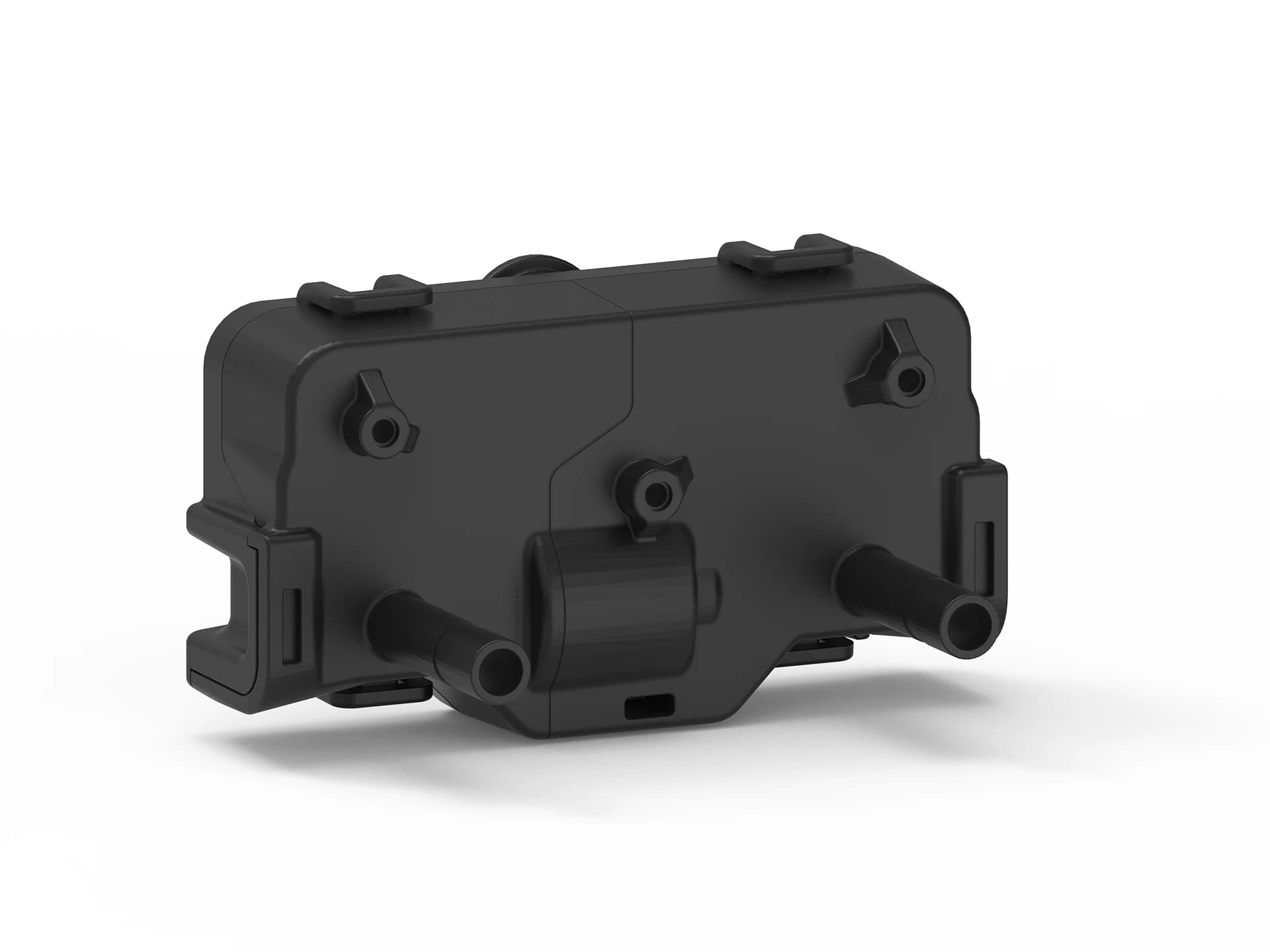
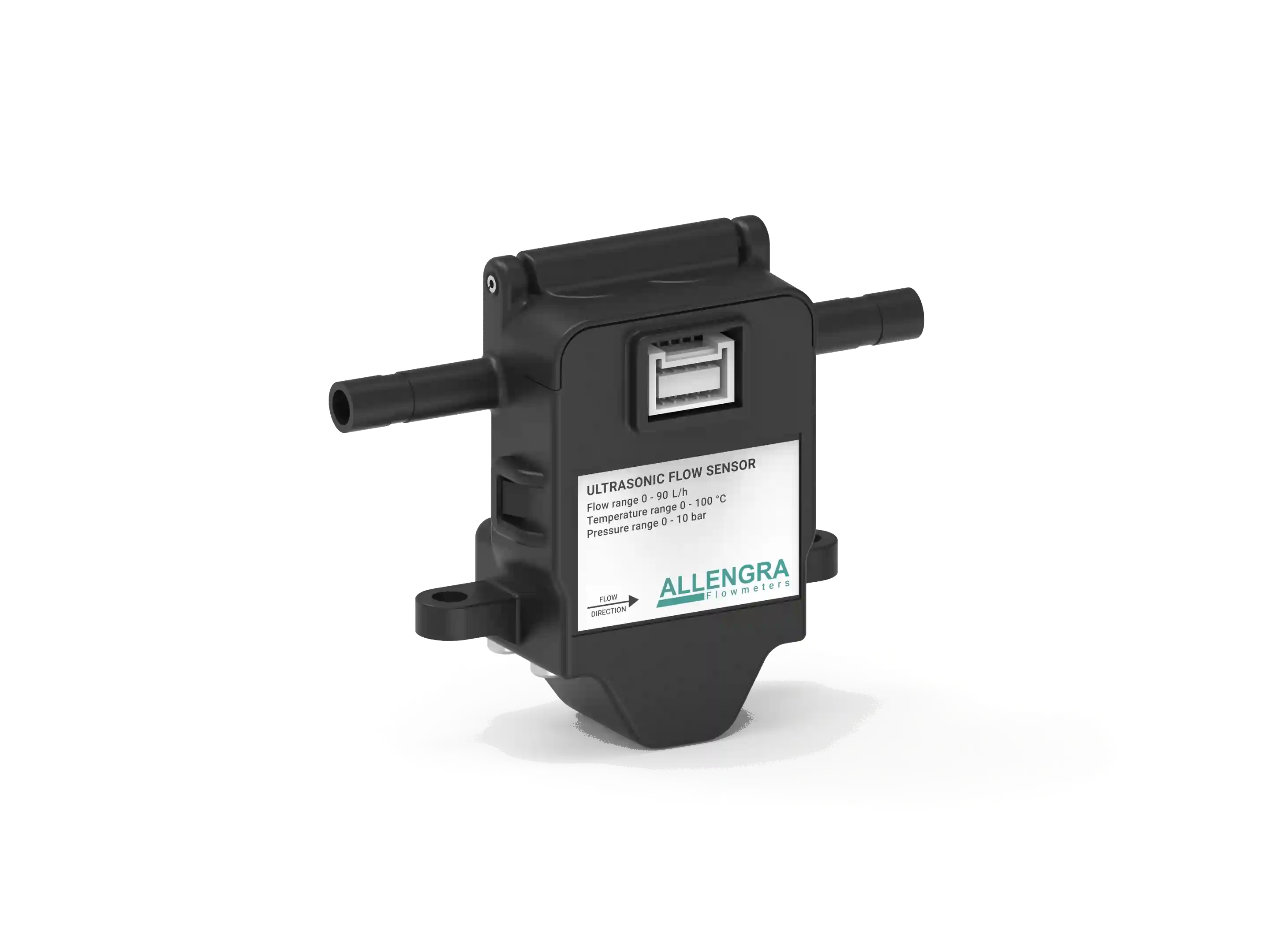
Automatic coffee machines are one of the biggest use cases. Every shot needs a precise water volume, and the water is often near boiling, so the sensor has to handle both accuracy and heat. This is where fast temperature response actually matters: a regular RTD sensor struggles to keep up with how quickly the water heats during preparation, but a high-speed ultrasonic sensor can track it in real time. Allengra's Micro Flow Meter 2nd Gen was built with exactly this kind of application in mind, weighing under 50 grams and reaching ±2% accuracy in a compact push-fit design.

Water and soft drink dispensers
These need similar precision, particularly in commercial settings where hundreds of servings a day have to pour the same.
Juicers
Pulp and fiber foul mechanical sensors. Because ultrasonic meters have nothing spinning inside the flow path, they hold up better over time.
Automatic beer dispensers
Beer is carbonated, which makes it harder to measure. A mechanical meter with a spinning turbine gets thrown off by bubbles in the flow path, which produces inconsistent pours. Ultrasonic sensors avoid that, and Allengra's designs account for carbonated beverages, measuring accurately regardless of pressure or temperature right up to the point of dispensing. The Micro Flow Meter 2nd Gen also supports standard sponge ball ∅9.5mm cleaning.
Syrup and CO2 dosing
Dosing is less visible to the consumer but critical to the manufacturer. Getting the syrup-to-water ratio right in a beverage line, sometimes as diluted as 1:200, decides whether every bottle tastes the same. CO2 dosing in carbonation lines follows the same logic: too little and the drink is flat, too much and it's over-fizzy. A flow meter controls that dosing step, holding the ratio steady batch after batch.
Bubble and empty-container detection
In a coffee machine, an empty milk container doesn't always signal itself, and the pump can keep drawing air instead of milk for several cycles before anyone notices. A sensor that reads air bubbles in the flow flags the problem early, which saves wasted cycles and keeps drink quality steady.
Across these applications, Allengra's micro sensors share a common spec envelope:
Flow range: about 0.02 to 5 liters per minute, depending on the variant
Operating pressure: up to 10 or 16 bar
Temperature: up to 105°C, covering cold water dispensing to near-boiling coffee prep
Allengra's food and beverage industry page lists the full range of applications and use cases.
Other Types of Flow Meters Used in Food and Beverage
Ultrasonic isn't the only choice, and the alternatives explain why manufacturers so often land on it anyway.
Turbine and mechanical meters use a small spinning rotor or paddle wheel inside the flow path. They're simple and inexpensive, but that spinning part is also the weak point: it wears down over time, gets affected by particles or bubbles in the fluid, and needs more frequent maintenance in anything but perfectly clean liquids.
Electromagnetic (magnetic) flow meters work using Faraday's law, essentially detecting voltage generated as a conductive liquid passes through a magnetic field. They're accurate and widely used for water and milk, but there's a catch: they only work on conductive fluids. Oils, syrups, and some other beverage ingredients simply won't register on a magnetic meter, which limits where it can be used across a mixed production line.
Coriolis flow meters measure mass flow directly by detecting how a vibrating tube twists as fluid passes through it. They're known as something of a gold standard for accuracy, and they can measure density and temperature at the same time. The tradeoff is size, cost, and pressure drop. Coriolis meters tend to be bulkier and pricier than ultrasonic alternatives, which makes them a harder fit for compact OEM applications like a coffee machine or a countertop dispenser, where every gram and every cubic centimeter of space counts.
Each of these technologies has its place, and larger industrial pipelines sometimes lean on Coriolis or magnetic meters for good reason. But for compact, hygienic, OEM-integrated food and beverage equipment, ultrasonic sensors tend to check more boxes at once: no moving parts, work on nearly any fluid, whether conductive or not, compact enough for tight enclosures, and self-cleaning by nature rather than by added maintenance.
Why Ultrasonic Comes Out Ahead for Food and Beverage
Ultrasonic doesn't win every scenario. Metering thousands of liters an hour through a large industrial pipeline can make a different technology the better financial call. For the applications that define most of the food and beverage sector, dispensers, coffee machines, dosing systems, and dairy lines, the mix of hygienic design, no moving parts, and flexibility across fluid types is difficult to match.
Ultrasonic sensors are also silent, start measuring from zero flow (some mechanical meters need a minimum threshold before they register anything), and read flow in both directions. With food-approved materials and drinking water certifications where relevant, the sensor fits directly into equipment meant to touch what people eat and drink.
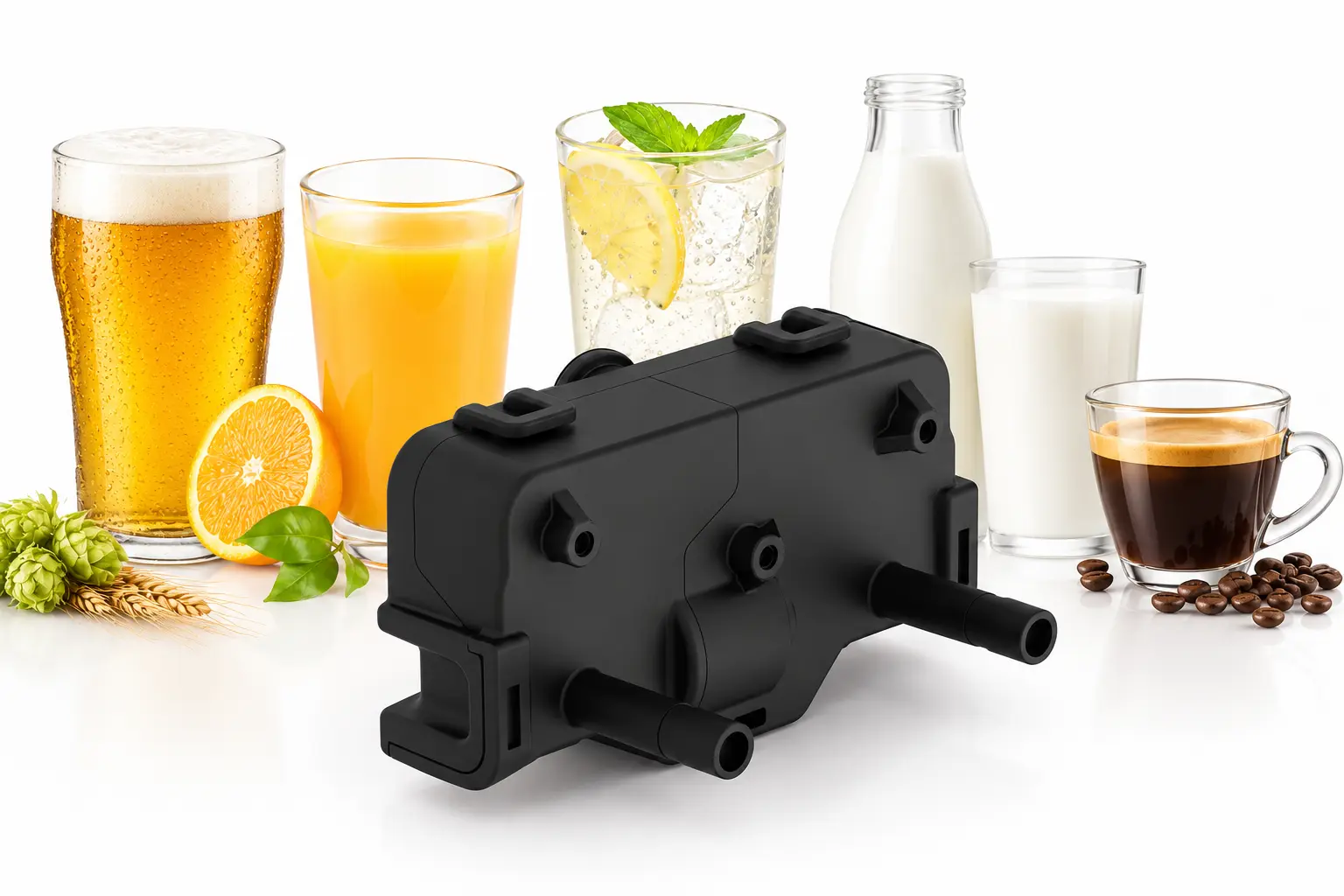
If you're designing equipment to measure coffee, milk, juice, soft drinks, or beer with precision and without adding maintenance, a compact ultrasonic sensor is worth checking against your specific flow range and connection type. Allengra's food and beverage industry page breaks down the applications in more detail, and the Micro Flow Meter 2nd Gen and Inline Micro Flow Meter product pages carry the full technical specifications for comparing numbers.