In search of power balance, FIM WorldSBK arrived in Oradea

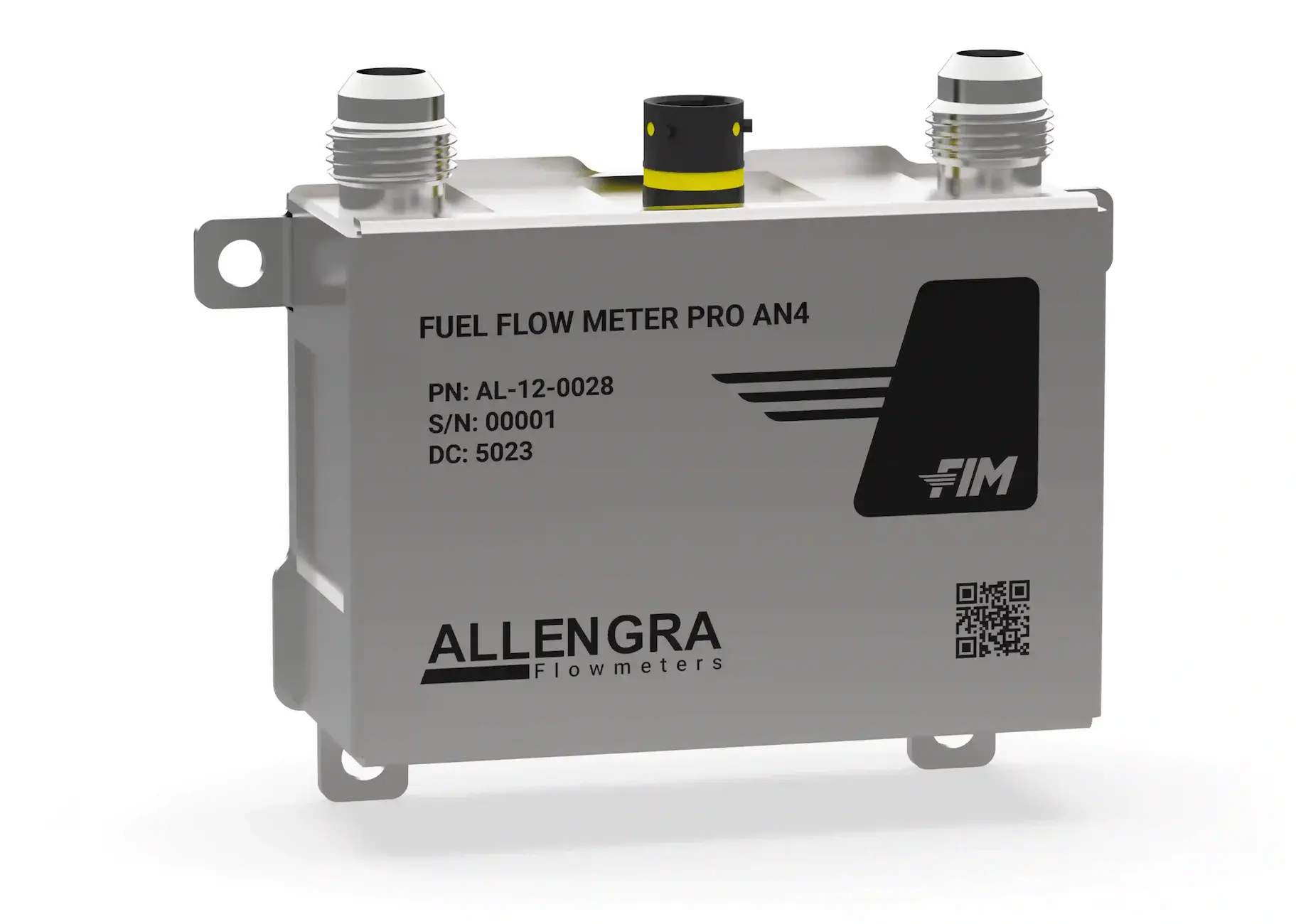
Allengra rose to the challenge of developing an impossible-to-cheat fuel flow meter for Formula 1, winning the design competition relaunched by the FIA in 2024, following an announcement back in 2020, right before the Covid-19 pandemic. After multiple tests, the sensors will officially be fitted on Formula 1 cars in 2026. But before that, the ripple effect of the FIA announcement led FIM WorldSBK organisers to bring the company in as the sole supplier for implementing a new power adjustment system between the motorcycle brands competing in the championship. [1]
Parity and the spectacle of racing have always mattered to WorldSBK. Since its founding in 1988, there have been countless changes to technical and sporting regulations—from the number of races, Superpole, experiments with a reversed grid, concessions and restrictions. Now, we are in the Fuel Flow Meter era.
A major shift, considering that in recent seasons absolute dominance was countered by adjusting RPM limits. Jonathan Rea [2] explained during his dominant period—when he won six consecutive titles with Kawasaki—how technicians worked to make the engine produce power at lower revs by modifying the electronic map and lengthening the gear ratio to reach the necessary top speed before hitting the limiter. But these changes altered the bike’s character, making adaptation difficult for the rider. Another issue was that some manufacturers anticipated such changes in the production model, and adjustments of 250 rpm became insufficient to make a real difference—especially if that bike already relied on low-end torque. [3]
From 2024, a new solution for equalising power was already being tested—monitoring and adjusting fuel flow. In general, we’ve viewed regulation changes from the outside, but this time the sensor at the heart of this major new recalibration was being built in Oradea, Romania.
Allengra testing – WorldSBK 2024 and system implementation
In 2020, Niels Junker read the FIA announcement seeking a new solution for measuring fuel flow in Formula 1. Then the pandemic hit, but Allengra got to work on the project with the goal of fitting a Romanian-made sensor to machinery at the very highest level of motorsport. In 2024, the official announcement arrived and Allengra became the official supplier for the 2026–2030 period. And because news travels extremely fast, World Superbike took a strong interest in the sensor; in April 2024, the Allengra team made its first trip to the paddock of the World Championship for production-based motorcycles in Barcelona, marking the start of an ongoing collaboration with organisers, teams, and manufacturers.

2024 was a season of data gathering with no restrictions whatsoever. Two sensors were provided to each manufacturer, and we worked together to understand the needs of every party.
The sensor had to be compact, lightweight, and offer installation flexibility—some motorcycles have it mounted visibly on the outside, others inside the tank—and, of course, it had to withstand surrounding component temperatures of up to 85°C as well as vibrations, to ensure continuous operation and data accuracy. It features one information channel accessed by the organiser and, separately, data that teams can use and correlate with the electronic systems already present on the bike.
After a season of collecting data, the organiser and teams decided on the limitation method and the maximum reference limit for 2025—47 kg/h. Every two rounds, depending on results and after data analysis, this limit can be adjusted to keep performance as balanced as possible. Manufacturers in difficulty can benefit, as part of the concessions system, from a positive adjustment. Also, depending on weather conditions, teams receive the permitted limit for race day, where the baseline reference may be slightly modified, and they adapt the bike’s electronic setup accordingly.
The implications are therefore wide-ranging. It’s not only about removing performance gaps. Beyond that, teams can view the measured fuel flow in kg/h, fuel temperature, and the pressure exerted by the liquid. The sensor is also used for engine optimisation within the imposed limits, problem detection, and in-depth tuning. Marco Zanbenedetti, Ducati WorldSBK Technical Director [4], had already anticipated before the season how this new standard would evolve and what engineers would be juggling from then on. In a hypothetical case, following a negative adjustment where the team would have to run a leaner fuel mixture map, the line between performance and reliability becomes thinner. With less fuel at the moment of combustion, the engine overheats more easily, wear risk is higher, and fuel flow limitation effectively extends into what reliability solutions teams can find—perhaps sacrificing some performance to ensure they remain within the maximum number of engines allowed per year.
For some smaller operations, the Allengra component is simply a regulation-mandated requirement; but for those focused on development, the solution has been met with great interest—some teams purchased only the minimum required, while others requested 25 sensors or expanded the application to sister teams in the EWC endurance world championship. And in cars—not only in Formula 1 is it present, but also within certain WEC teams, for whom the delivered data becomes extremely important in races where the power unit is pushed to the limit.

WorldSBK 2025: Two riders separated by a small gap and the debut of FFM adjustments
The season began in February 2025 at Phillip Island. Toprak Razgatlıoğlu arrived as the reigning World Champion and with the record for consecutive race wins. The pre-season was marked by disagreements over the chassis used by BMW. Before the Turkish rider joined the team, BMW had certain concession points available and could use components not found on the production model. After their dominance in 2024, BMW lost those concessions, and the uncertainty over which chassis they would be allowed to use [5] led to Razgatlıoğlu’s frustration in the season’s early races. He admitted he didn’t feel the same as the previous year, [6] but the BMW team remained confident they would find the right path. In practice, they had tested during a weather-disrupted pre-season and with the World Champion’s injury under the assumption they would be able to use certain components, but late communication from the FIM put them in this bind. [7] Nicolo Bulega and Ducati were there to take advantage—and that’s exactly what happened.
After interpreting the information provided by the Allengra sensors from the opening races of the season, the first adjustment was clear to the organisers—Ducati and BMW had to use less fuel. The same happened at checkpoint 2 and 3. As mentioned above, adjustments are scheduled every two rounds. By mid-season, Razgatlıoğlu and BMW managed to adapt to the new chassis configuration and the 2024 dominance was replicated in 2025. Bulega was the only competitor close to the reigning champion, with the rest of the field often finishing more than 10 seconds behind. Asked about Fuel Flow, Bulega was sceptical: “every time (the organisers) try to balance the power, I see that Toprak is still first and I’m second. I don’t know if it’s the right direction.” Since the changes are applied to the manufacturer and not the rider, the other Ducati riders were also affected, just as in the RPM limit era. Danilo Petrucci (Barni Ducati), a taller and heavier rider, admitted after Donington: “Compared to the start of the season, after the fuel flow adjustment, I have to say I’m quite affected. It’s impossible for me to pass Nicolo Bulega because on the straight they have something extra.” [8] Sam Lowes (Ducati MarcVDS) also revealed that he doesn’t feel anything after the adjustments, although he acknowledged the effect is visible in the recorded data. The limitation is a bit clearer where fuel is used most—sixth gear, at high revs—but the time spent there is quite small [9].
The only positive adjustments of the season were those used via the concessions system by Honda—starting at Magny-Cours (September)—and Yamaha—starting at Estoril (October). Both received half a kg more than the baseline reference—47 kg/h. As a result, by the end of the season Yamaha and Honda were able to use a fuel flow 2 kg/h higher than Ducati and BMW. While Yamaha could be seen holding up better on the Estoril main straight against rivals compared to earlier moments, Honda has issues that go beyond sheer power—riders most often pointing to rear grip in their comments.
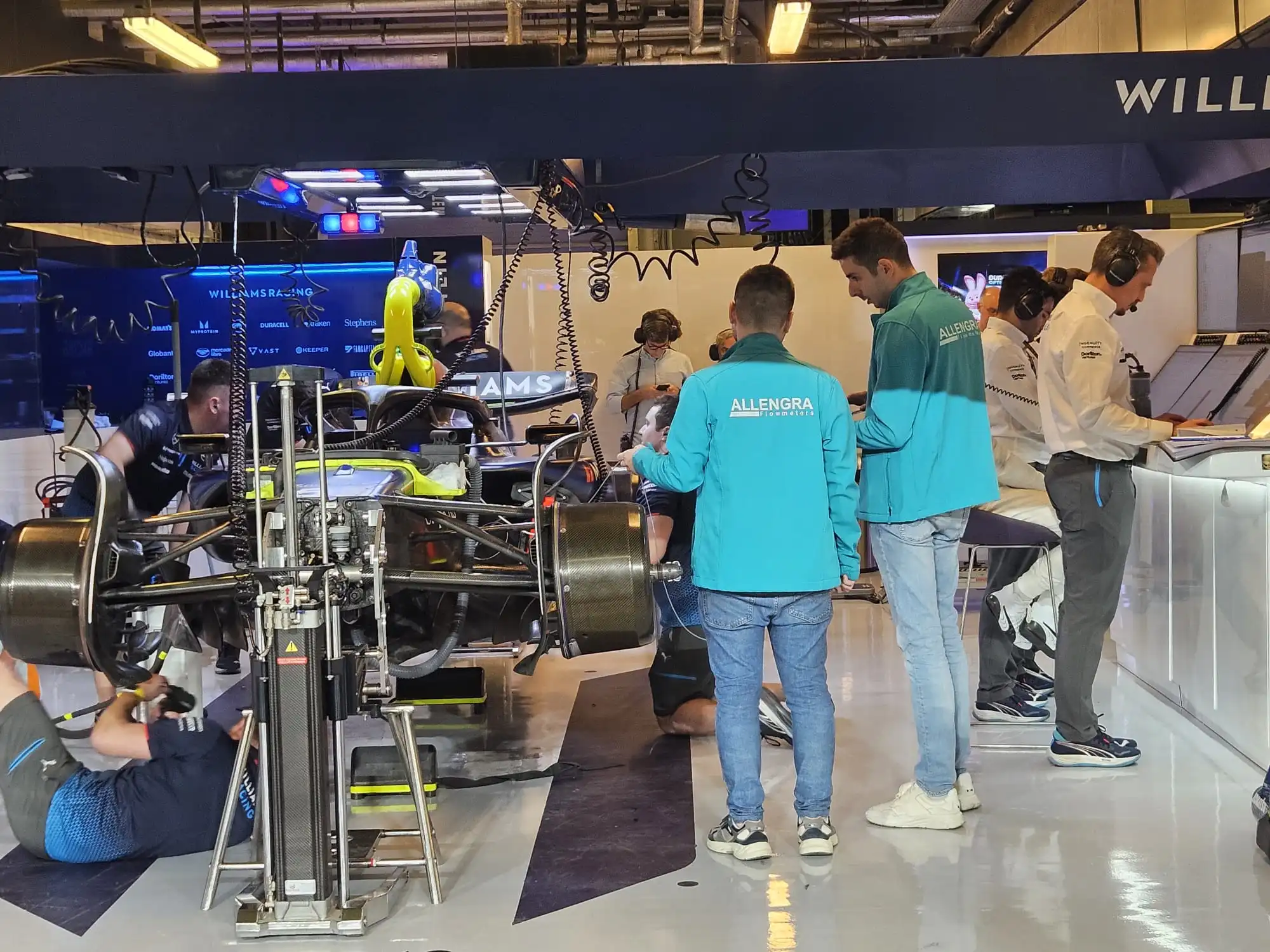
The Allengra team attended multiple rounds of the championship. The largest team was present at the round closest to Romania—Balaton Park in Hungary—where a proper Team Building could take place and where, beyond working with teams to ensure correct sensor operation, positioning, and calibration, they also witnessed the 1000th race in the championship’s history. The Superpole Race at the Hungarian round was won spectacularly by Toprak Razgatlıoğlu, in mixed conditions.

That brings us to the final round of the 2025 season, held at the Jerez circuit in southern Spain. Razgatlıoğlu and BMW would have preferred to settle matters quickly, holding a 39-point advantage at the start of the weekend. However, a rare and controversial moment in the Superpole Race meant the title would be decided in the season’s last race for the first time since 2014. After the morning start, at Turn 5—a long right-hander—Bulega rushes to attack Razgatlıoğlu, the two make contact, and the BMW rider goes down and is forced to retire. Bulega is penalised with a Long Lap Penalty, but the three-second loss is not enough for the rider in second place to catch him. The gap was too large. More upsetting were the boos directed at him. Still, Razgatlıoğlu escaped without injury and, while it was mathematically possible for him to lose the title, race two would be a formality for the Turkish rider. He needed only 3 points in the likely event that Bulega won. Even so, the tension he felt was heavy, aware that a technical issue or a mistake can strike at any time without warning.
Razgatlıoğlu, before leaving for MotoGP, becomes Superbike World Champion for the third time—his second consecutive title with BMW—while Ducati win the manufacturers’ title.
What to expect next
If in 2024 Allengra gathered data, 2025 was the season in which fuel flow began to be adjusted based on results and the interpretation of information. It was a season that revealed a lot and opened up directions for the future. Unlike the car world, motorcycle racing has an extremely important parameter—the rider. I’m not necessarily referring to riding technique or differences between motorcycle and car drivers. They are two completely different phenomena. To make the motorcycle turn, the rider also intervenes with their own body mass, moving and positioning it in a way that influences how the bike takes corners, brakes, or accelerates. Perhaps that’s why the way this new performance-equalisation rule is implemented through fuel flow adjustment becomes quite complicated for some teams or riders—as we saw in Bulega’s comments. Still, the fact that BMW stated at the beginning of 2026 that fuel flow adjustments impact performance more than other components within the concessions system [10] confirms that there are many technical aspects we can focus on going forward—from different fuel types in a greener world, to restrictions, power balancing, or reliability.
2026 is a very important season for Allengra. Alongside continuity in WorldSBK, where Ducati and Bimota have already received a -0.5 Kg/h correction [11], the long-awaited moment has arrived—the competitive debut in Formula 1. Beyond that, collaboration with teams in the WEC endurance world championship, as well as in EWC motorcycle endurance or MotoGP, also offers new development opportunities—not only at fuel level, but also at the level of cooling systems. New paths waiting to be discovered, with the same enthusiasm as when the company decided to get involved in motorsport after reading an FIA announcement in 2020.

References
[1]
A. Criș, „Oradea în Formula 1: O firmă orădeană a dezvoltat un super-dispozitiv pentru motoarele monoposturilor din „Marele Circ”,” eBIHOREANUL, 18 March 2025. Available: https://www.ebihoreanul.ro/stiri/oradea-in-formula-1-o-firma-oradeana-a-dezvoltat-un-super-dispozitiv-pentru-motoarele-monoposturilor-din-marele-circ-foto-192646.html.
[2]
mcnews.com.au, „Jonathan Rea on the ZX-10RR rev restrictions in WSBK,” 16 02 2018. Available: https://www.mcnews.com.au/jonathan-rea-zx-10rr-rev-restrictions-wsbk/#:~:text=However%2C%20Rea%20who%20arrived%20back,4%2C%20and%20Tyler%2C%202.
[3]
R. Jones, „WorldSBK: Jonathan Rea on Ducati rev limits cut: “We’re talking about peanuts”,” crash.net, 21 July 2023. Available: https://www.crash.net/wsbk/news/1031639/1/rea-ducati-rev-limits-cut-we-re-talking-about-peanuts#:~:text=Rea%2C%20who%20remained%20atop%20WorldSBK,we're%20talking%20peanuts.%22.
[4]
P. Gozzi, „L'era delle Superbike con meno benzina, ecco come funziona,” CorseDiMoto, 25 January 2025. Available: https://www.corsedimoto.com/paolo-gozzi-blog/ecco-superbike-meno-benzina-come-funziona#google_vignette.
[5]
A. Lecondé, „WSBK: BMW denounces “illogical” rule change,” paddock-gp, 13 February 2025. Available: https://www.paddock-gp.com/en/wsbk-bmw-denounces-illogical-rule-change/.
[6]
WorldSBK, „"Not turning, not stopping, not gripping" - Razgatlioglu despondent after Friday in Australia,” WorldSBK, 21 February 2025. Available: https://www.worldsbk.com/en/news/2025/Not%20turning%20not%20stopping%20not%20gripping%20Razgatlioglu%20despondent%20after%20Friday%20in%20Australia.
[7]
WorldSBK, „Muir on BMW turning their season around: "It’s been a real struggle to claw back the deficit to Bulega's Championship lead",” WorldSBK, July 2025. Available: https://www.worldsbk.com/en/news/2025/Muir%20on%20BMW%20turning%20their%20season%20around%20Its%20been%20a%20real%20struggle%20to%20claw%20back%20the%20deficit%20to%20Bulegas%20Championship%20lead.
[8]
A. Whitworth, „Ducati WorldSBK riders split on effect of fuel flow rules,” crash.net, 19 July 2025. Available: https://www.crash.net/wsbk/news/1077324/1/ducati-worldsbk-riders-split-effect-fuel-flow-rules.
[9]
A. Whitworth, „Sam Lowes: WorldSBK fuel flow rules “make no difference”,” crash.net, 21 July 2025. Available: https://www.crash.net/wsbk/news/1077325/1/sam-lowes-worldsbk-fuel-flow-rules-make-no-difference.
[10]
E. Hannigan, „BMW admits 2026 fuel flow reductions have hit WorldSBK manufacturers ‘much harder’ than concessions,” motorsportweek.com, March 2026. Available: https://www.motorsportweek.com/2026/03/18/bmw-admits-2026-fuel-flow-reductions-have-hit-worldsbk-manufacturers-much-harder-than-concessions/.
[11]
WorldSBK, april„Ducati and Bimota will both face a 0.5kg/h Fuel Flow penalty following the latest Concession Checkpoint",” WorldSBK, 2026. Available: https://www.worldsbk.com/en/news/2026/Fuel+flow+changes+for+Ducati+and+Bimota+ahead+of+Assen+WorldSSP+and+WorldSPB+homologated+bikes+updated?fbclid=IwdGRzaAROCGdjbGNrBE4IUmV4dG4DYWVtAjExAHNydGMGYXBwX2lkDDM1MDY4NTUzMTcyOAABHgOVjtbT9lnPTwecUj9h41thaNSbCVXQ0MWBpR4I-YgHdAqIXC0bVP89J0FG_aem_MCl9j5s_f5ySBx1qxKRYew&sfnsn=scwspwa