

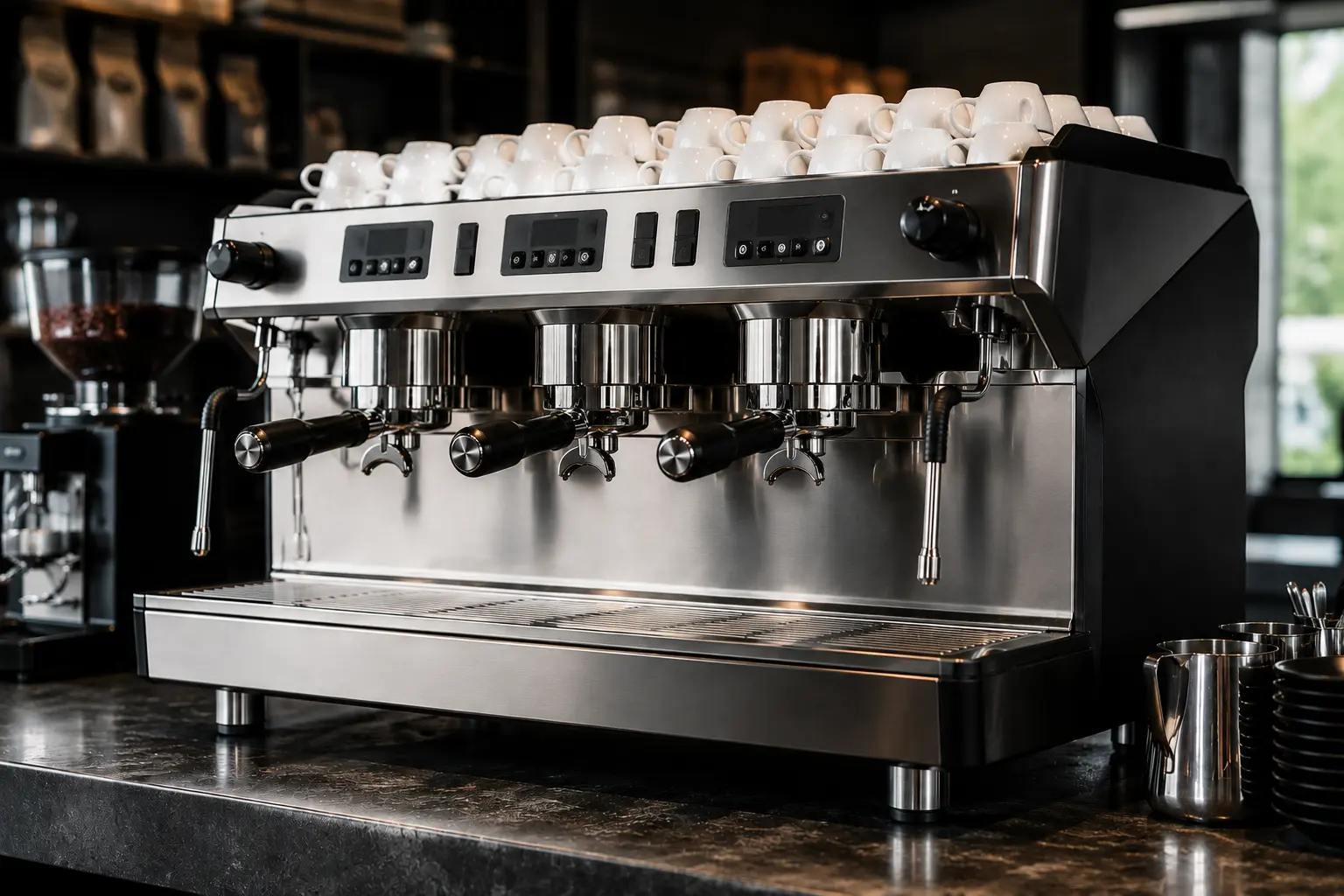
What Causes Air Bubbles in Coffee Machines and Beverage Systems and How to Handle Them?
When a coffee machine starts dispensing inconsistently, making unusual noises or producing unstable foam, the first assumption is usually a pump issue or maintenance problem. But in many cases, the real cause is much simpler, air bubbles inside the system.
Air trapped in beverage lines can affect everything from drink consistency to equipment lifespan.
The challenge is that air bubbles are not always visible immediately. By the time operators notice the symptoms, performance may already be affected.
In this article, we’ll look at the most common causes of air bubbles in beverage systems, why they create problems, how they can seriously damage coffee machines over time, and how modern flow monitoring technologies help prevent them.
Why do air bubbles appear in beverage systems?
Air enters beverage systems whenever the liquid flow becomes unstable or the system allows air to enter through small leaks or interruptions.
This can happen in both simple and highly automated beverage equipment.
1. Loose connections and fittings
One of the most common causes is loose or worn connections.
Even a very small gap around tubing, connectors, filter heads or pumps can allow air into the liquid line without creating visible leakage.
Over time, this affects flow stability and dispensing precision.
2. Empty coffee or milk containers
When containers run empty, pumps may start pulling air together with the liquid.
This is especially common in high-volume coffee environments where milk or syrup containers are replaced frequently throughout the day.
3. Improper priming after maintenance
After cleaning or replacing filters, systems need to be properly primed to remove trapped air.
If this process is incomplete, air pockets remain inside the lines and continue circulating through the system. This phenomenon is often called poor priming or lack of proper venting.
4. Aging or damaged tubing
Tubing naturally wears over time due to heat, pressure, cleaning chemicals and continuous operation.
Small cracks or hardened tubing can introduce air long before any visible liquid leak appears.
5. Pump cavitation
Cavitation occurs when unstable liquid flow creates vapor bubbles inside the pump itself.
Besides affecting dispensing consistency, cavitation can gradually damage internal components and reduce pump lifespan.
Why air bubbles are more dangerous than they seem
Air bubbles are not just a temporary flow issue. If the machine continuously pulls air instead of water and the problem is not solved quickly, the lifespan of the coffee machine can decrease dramatically.
1. Pump overheating and dry running
Coffee machine pumps, whether vibration or rotary pumps, are designed to always operate with water.
Water is not only used for beverage preparation. It also acts as:
A cooling agent
A lubricant for internal moving components
When large air bubbles enter the pump or completely block the water flow:
The pump starts running “dry”
Vibrations and operating noise increase significantly
Internal plastic parts and seals heat up rapidly
Without the cooling effect of water, the pump can overheat within a short period of time.
If the situation lasts longer than a minute or happens repeatedly, the internal pump coil may burn out or the piston may seize permanently, requiring full pump replacement.
2. Cavitation and microscopic damage
When air bubbles move through areas with rapid pressure changes, especially inside espresso pumps operating at 9-15 bars, a destructive physical phenomenon called cavitation appears.

Under high pressure, the bubbles implode with microscopic force.
These repeated micro-explosions generate shock waves inside the hydraulic circuit, gradually eroding metal and plastic surfaces while damaging valves and pump chambers. Over time, this process weakens internal components and can create cracks and pressure losses inside the system.
Cavitation is often silent at first, but it progressively weakens the system internally.
3. Thermal stress and heating element damage
Inside boilers, water must constantly cover the heating element.
Large air pockets inside the circuit can create air gaps around the heating surface.
Since air transfers heat far less efficiently than water, the heating element can overheat almost instantly in those areas.
This may lead to cracked heating elements, burned thermal fuses, premature heater failure and reduced temperature stability during extraction.
How air bubbles affect coffee and beverage quality
In beverage systems, stable flow is directly connected to product quality.
Even small amounts of air can create inconsistent coffee extraction, interrupted beverage dispensing, incorrect drink volumes, unstable milk foam, splashing or sputtering, pressure fluctuations, increased pump wear and noisy machine operation.
How to recognize air in the system
In many cases, operators can identify the issue before serious damage occurs.
Typical signs include:
A much sharper buzzing or louder humming noise than usual
Very little or no water flow despite the pump running
Coffee dispensing that sputters or spits water mixed with steam
Unstable or interrupted flow
Pressure that fails to build properly during extraction
Pressure gauge needles remaining unusually low
These symptoms often indicate that the machine has become partially or completely de-primed.
Why early detection matters
One of the biggest problems with air bubbles is that operators often discover them too late.
The machine may continue working while performance slowly becomes less stable over time.
That’s why modern beverage systems increasingly use intelligent flow monitoring technologies that can detect air bubbles before major issues appear.
How Allengra helps detect air bubbles early
This is where the Allengra Micro Flow Meter becomes especially valuable.

Designed for highly precise low-volume flow measurement, the Micro Flow Meter is used in applications such as:
Automatic coffee machines
Beverage dispensers
Water systems
Juice machines
But beyond accurate flow measurement, the system offers air bubble detection to timely detect empty or almost empty coffee containers.
By detecting when air enters the liquid flow, the system helps operators identify empty containers, flow interruptions, irregular liquid supply and potential dispensing instability before they affect machine performance and beverage quality.
More importantly, bubble detection also contributes directly to the longevity of the coffee machine.
By identifying air entering the hydraulic circuit early, the system helps prevent:
Dry pump operation
Cavitation damage
Overheating
Thermal stress on heating components
This allows faster intervention before beverage quality, machine performance or critical internal components are affected.
The benefits of bubble detection technology
Stable liquid flow contributes to more consistent beverage quality by ensuring accurate dosing and extraction during dispensing.
At the same time, early detection of flow interruptions helps reduce equipment downtime by preventing unnecessary stress on pumps and internal components.
The system also improves refill management, allowing operators to identify empty containers before dispensing issues appear.
In the long term, preventing cavitation and unstable flow leads to lower maintenance costs by reducing wear and tear on the equipment.
Air bubbles may seem like a small issue, but in coffee machines and beverage systems they often signal deeper flow instability that affects performance, drink quality and equipment lifespan.
Solutions like the Allengra Micro Flow Meter not only provide accurate flow measurement but also help detect air bubbles early enough to prevent interruptions, reduce downtime, extend equipment lifespan and improve overall system reliability.