

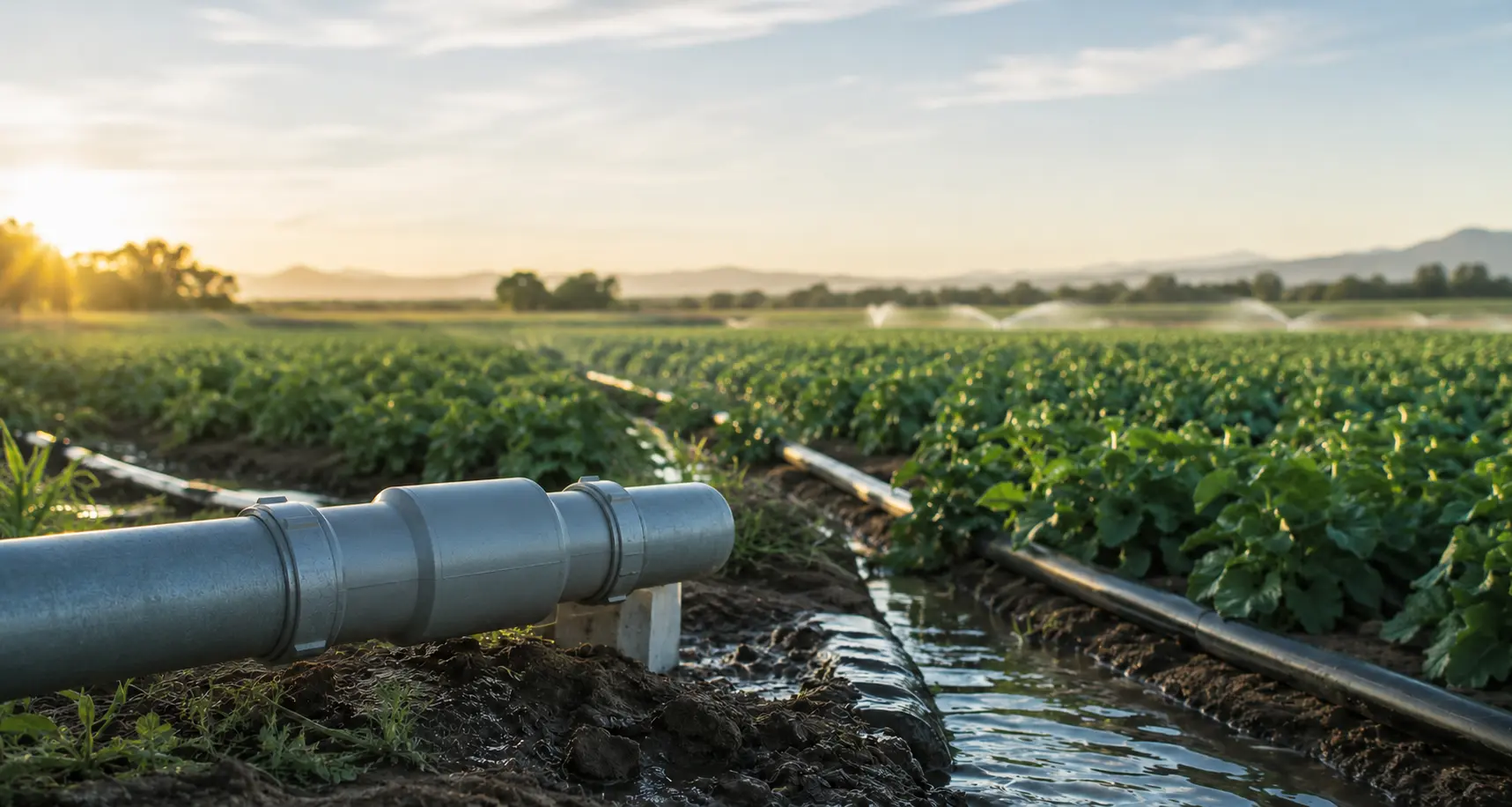
Agriculture depends on reliable access to water, but using more water does not necessarily lead to better results. What matters is delivering the right amount, to the right area, at the right time.
Many irrigation systems still operate mainly according to fixed schedules or pump running times. These methods indicate how long the system has been active, but they do not always show how much water has reached each irrigation zone. Real-time flow measurement closes this information gap and gives farm operators a clearer view of water movement throughout the system.
The Irrigation Challenge
Irrigation networks can cover large areas and include pumps, storage tanks, filters, valves and multiple distribution lines. Even when the system appears to operate normally, actual water delivery may differ from the planned values.
Common causes include:
Leaks in underground or exposed pipelines
Partially blocked filters or irrigation lines
Valves that do not open or close correctly
Changes in pump performance
Uneven distribution between irrigation zones
Differences between scheduled and actual water delivery
Without measured flow data, these issues may remain unnoticed until crops begin to show signs of water stress or water consumption rises unexpectedly.
From Irrigation Time to Actual Water Delivery
A timer can show that a pump operated for one hour, but it cannot confirm that the expected volume of water passed through the system during that period. Pressure changes, blocked lines or equipment wear can all affect the delivered flow.
By measuring flow continuously, operators can compare the planned irrigation volume with the volume that was delivered. This makes it easier to adjust irrigation schedules based on real system performance rather than assumptions.
Where Flow Measurement Adds the Most Value
Strategically placed sensors can provide insight at several points in an irrigation network:
At the main supply line, to monitor total water consumption
After pumps, to verify operating performance
At individual irrigation zones, to compare water distribution
Near storage tanks, to monitor filling and discharge
Before sensitive field sections, to identify unexpected flow changes
The objective is not to install a sensor at every possible point. It is to select measurement locations that make the system easier to understand and manage.
Detecting Water Losses Earlier
A sudden increase in flow may indicate a broken pipe or an open valve. A lower-than-expected value may point to a clogged filter, a blocked irrigation line or reduced pump performance. Continuous monitoring helps operators recognize these deviations while irrigation is taking place.
Earlier detection can limit unnecessary water loss and reduce the time spent searching for the source of a problem. It also allows maintenance teams to investigate specific sections of the network instead of inspecting the entire installation.
Improving Distribution Between Irrigation Zones
Different fields or greenhouse sections may receive different quantities of water even when they are scheduled for the same duration. Pipe length, elevation, valve condition and local restrictions can influence actual flow.
Zone-level measurements make these differences visible. Operators can use the data to balance irrigation periods, adjust valves or investigate sections that consistently receive too much or too little water. This supports more uniform growing conditions without automatically increasing overall water use.
Using Pumps More Efficiently
Pumps are a major part of the energy demand of irrigation systems. Flow data helps operators see whether a pump is delivering the expected volume under current operating conditions.
If the measured flow changes while the operating settings remain the same, the system may require inspection. Combining flow information with pressure and temperature data can provide an even clearer picture of system performance and support better decisions about operating times and maintenance.
Turning Flow Data into Practical Decisions
Measurement creates value when the information can be used by the farm's control or management system. Real-time and historical flow data can help operators:
Compare water consumption across fields or irrigation cycles
Identify recurring deviations in specific zones
Confirm whether planned irrigation volumes were delivered
Set alerts for unusual high or low flow conditions
Plan maintenance using system performance data
Document water uses more accurately
Over time, these records can reveal patterns that are difficult to identify through occasional manual checks.
The Role of Ultrasonic Flow Measurement
Ultrasonic flow sensors are suitable for automated irrigation systems because they provide continuous measurements and respond quickly to changing flow conditions. Their low-pressure loss is particularly valuable in networks where maintaining efficient water circulation is important.
They can be integrated into control systems through digital or analog outputs, allowing measurements to support alarms, dashboards and automated processes. The exact sensor configuration should be selected according to the flow range, pipe size, liquid properties, temperature, pressure and installation conditions of the application.
A More Data-Driven Approach to Irrigation
Smart irrigation is not only about automating when a valve opens or a pump starts. It is also about confirming what happens after that command is given.
Accurate flow information helps farms understand how water moves through their infrastructure, respond faster to losses and improve distribution between irrigation zones. Instead of relying only on schedules and estimates, operators can base irrigation decisions on measured performance.
Water efficiency begins with visibility. When farms know how much water is moving through the system and where it is being delivered, they can identify problems earlier and make more informed adjustments.
Real-time flow measurement provides the practical data needed to improve irrigation consistency, reduce avoidable losses and support the responsible use of water. For modern agricultural operations, this makes flow monitoring an important part of a reliable and efficient irrigation strategy.